Maps:
Bogerud terrain map
|
Bogerud hundred economical map from 1883-95 with the wandering trail


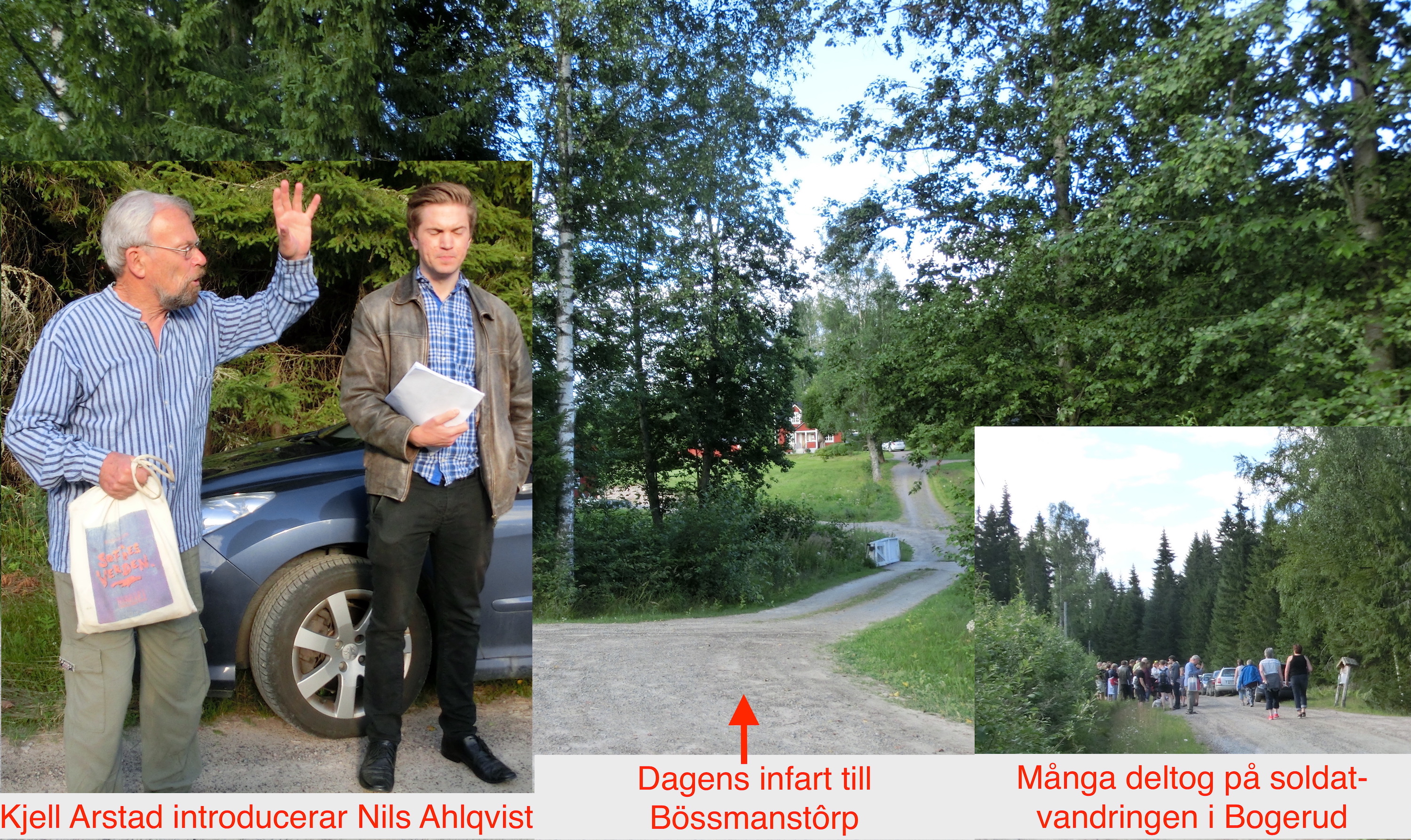
Meeting place at the entrance to Bössmanstôrp
Kjell Arstad welcomed and introduced the cicerone Nils Ahlqvist. Many interested participants had come.
Nils Ahlqvist told about the background that Gustavus Vasa in the 1500s introduced a stronger monarchy. 1542 the Smålanders rebellion occurred, the so called Dacke rebellion. Gustavus Vasa had then a mercenary army. He observed that the Småland peasants fought well as good as the mercenary army.
In the 1500s Gustavus Vasa took steps to become less dependent on mercenaries. Gustavus Adolphus introduced that every 10th Swede would do military service. During the Thirty Years' War the approx. 140,000 men strong army included about 13,000 Swedes - the rest were mercenaries. However at Lützen only 100 of the 12,000-strong army were "allotted/croft soldiers" (see Allotment system)
Along the wandering trail
Here you see the other soldier crofts, Visteruds and Vistebergs soldier's residences. On Visteruds rote (similar to an English "file" or "ward") in the late 1700s the soldier Olof Ersson Vistberg lived. He was the grandfather of Lars Jonsson Bössman’s third wife Ingeborg Nilsdotter. Nils Ahlqvist told Visteruds soldier's croft was called Vistbostället and that several of the soldiers got the soldier name Vist. The soldiers at Vistebergs soldier's croft had the soldier names Visteberg or Vistman.
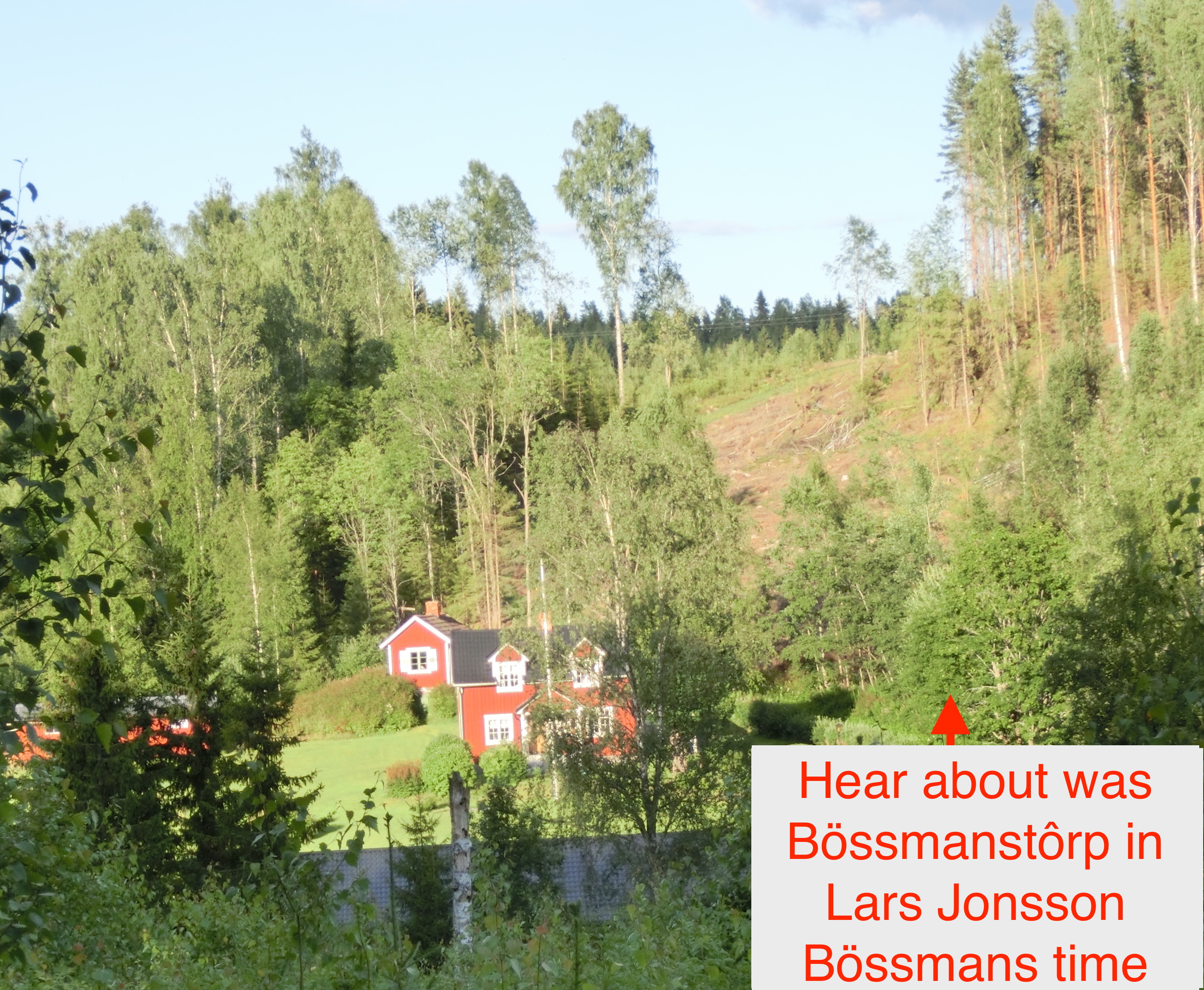
The soldiers on Bössmansbostället were maintained by Bössvikens rote, they got the soldier name Bössman during their service. We got a nice view of Bössmanstôrp (local Värmlandish name for Bössmansbostället) from a slope road. Gösta Persson, who lived at the site told me that his grandfather was the last allotted soldier. In 1919 he tore down the old soldier cabin, a new splendid house stands there today.
Our soldiers in military historical point of view (as Nils Ahlqvist told)
After the Thirty Years' War, Sweden was one of Europe's great powers. It consisted of Proper Sweden (Götaland, Svealand, Norrland, Finland) and Northern Germany and the Baltic countries. It became difficult to defend by soldiers recruited by force, who tried to run away as soon as they got the chance, to come home and work on their homesteads/crofts. Charles XI restructured the army. He got money through the reduction. This was that he withdrew the enfeoffments, fiefs and estates of the nobility and clergy. He could then invest in the army. For our part the Närke-Värmland regiment was set up. Soldier supply was via the "rote" (En. "file"/"ward"). Each rote provided for a soldier who typically was supported by about three homesteads (depending on the home's size). This became part of the farmers / homestead owners way to pay their taxes. For the soldiers the enticement to become a soldier was that: he received a salary from the state, a cottage, own soil. In this way, Sweden got a permanent soldier army with trained soldiers, which for a long time gave Sweden an advantage over other competing great powers.
March 6, 1700 the young Charles XII was on bear hunting. Sweden was then attacked by all its neighbors. Östra Ämtervik had 13 soldiers, according to the 1698 years of general muster roll, they belonged to the lieutenant colonel's company. Only parts of the Närke-Värmland regiment was called up for the battle of Narva, Östra Ämtervik’s soldiers were part of the home reserve. The battle is considered one of the Swedish military history's greatest victories, when the Swedish army managed to crush all Russian siege forces threatening Narva and Ingria. The 10,500-strong Swedish army under the 18-year-old Charles XII's personal management won over the more than threefold superior Russian army.
After this great victory, it was tempting to once and for all crush the Russian army. But they then started to use the Russian tactic, since proved successful until World War II. They withdrew, the Swedes came to them, then, they went back again, etc. This was repeated until the Swedes had been lured to Poltava in the current Ukraine in 1709. During the march to Poltava was the Russians' scorched earth tactic difficult to find supplies. The Swedes that started with 60,000 in Saxony had been decimated to 17,000. It met 40,000 Russians and the loss marked the end of Sweden's days of being a great power.
The final end came after Charles XII being shot at Fredriksten fortress in Halden, Norway in 1718. He had planned to siege Norway in order to have a trump card in negotiations with Denmark. Östra Ämterviks soldiers took part in the campaign against Norway. On the way to Norway the army stayed for rest at close by Nolbergsviken in Östra Ämtervik. So Östra Ämterviks's soldiers started at home.
——————
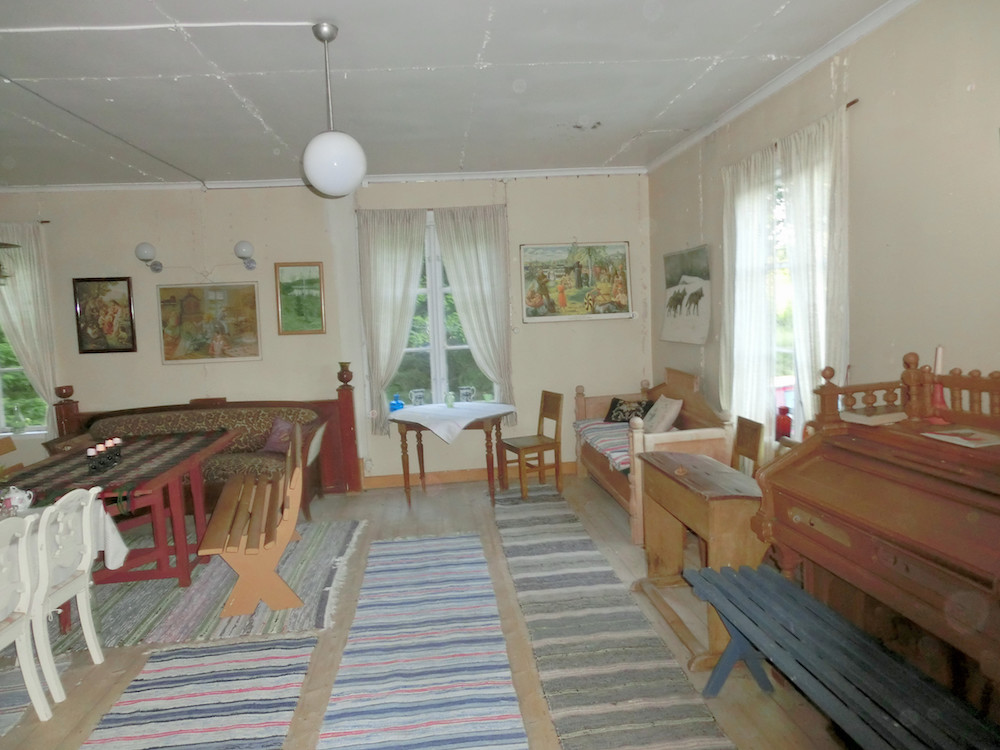
The walk ended with refreshments at the beautiful school Alkärrsrud (today Skogen) and Bogerud.